
Every year Christmas comes around and somehow takes me by surprise.
Every year I think: next year I will compose or arrange something for Christmas. Last year I managed to (for a change!) with an arrangement of a Christmas Carol Suite for concert band. This year, I let the time slide by.
So, in a last-ditch effort to salvage the opportunity to do something Christmassy, I decided to analyse a piece I might try and work on next year (lol, I bet) as an arrangement: O Little Town of Bethlehem.
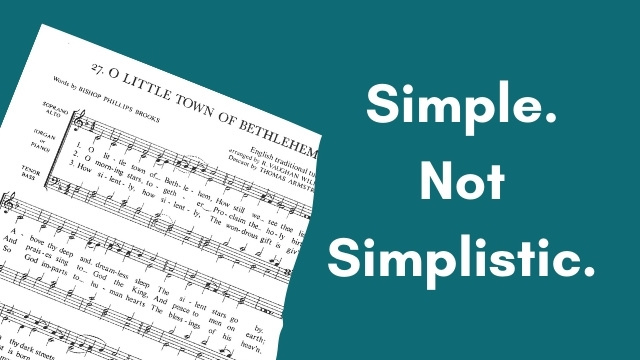
This article looks at the Forest Green version of the carol arranged by Ralph Vaughan Williams (RVW) and the one most commonly sung version in the UK. We will explore how a seemingly simple hymn achieves humility and warmth through form, harmony, and (crucially for RVW) line.
- Background: Two Melodies, One Text
- Annotated Score – Free Download
- Form: Strophic, but Not Static
- Score Study for Composers
- Cadences: Similar, but Not the Same
- Harmonic Language: Economy with Purpose
- Voice-Leading: Lines That Breathe
- Melody: From Sentences to Paragraphs
- The Descant: One Final Harmonic Turn
- Conclusion: Craft Through Restraint
- Score Study for Composers
- FAQs
Background: Two Melodies, One Text
O Little Town of Bethlehem is a Christmas hymn with two principal melodic traditions.
The text was written in 1868 by the American Episcopal priest Phillips Brooks, following a visit to the Holy Land in 1865–66. He attended a Christmas Eve service at the Church of the Nativity in Bethlehem, an experience that clearly left an impression.
Brooks originally wrote the poem for the Sunday School at the Church of the Holy Trinity in Philadelphia. His organist Lewis H. Redner supplied the melody now known as St. Louis, and the version that became especially common in the United States.
In the UK (and in the version analysed here, Rule Britannia!), the words are most often paired with Forest Green, an English folk melody adapted by Ralph Vaughan Williams. Vaughan Williams collected the tune in 1903 from a singer in Surrey, where it was associated with the ballad The Ploughboy’s Dream, before publishing it in The English Hymnal (1906).
The English Hymnal mattered. It formed part of a deliberate attempt to raise the musical standard of congregational singing in England, and Vaughan Williams leaned heavily on folk material to give hymn tunes a more native English character.
A Note on the Descant
The fourth verse of O Little Town of Bethlehem features a descant arranged by Sir Thomas Armstrong, a former student of Vaughan Williams at the Royal College of Music and later Principal of the Royal Academy of Music.
Armstrong’s descant provides a final layer of contrast and lift, which I will return to later.
Annotated Score – Free Download
Form: Strophic, but Not Static
O Little Town of Bethlehem is strophic: the same sixteen bars of music are repeated for each verse, with the text providing the primary source of contrast.
Strophic form is standard for hymns and carols. Repetition makes them memorable, singable, and practical for congregational use.
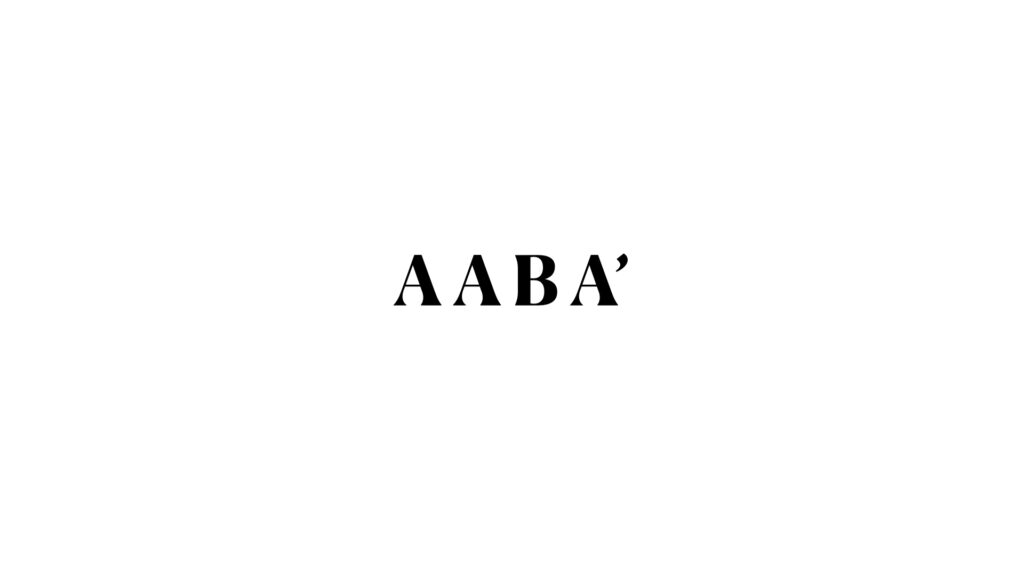
At the phrase level, however, the structure is more interesting: providing a formal arc and contrast that gives the verse enough variation to last the strophic repetitions. The form can be understood as A A B A′.
The original folk tune already implies this shape, and Vaughan Williams’ harmonisation reinforces it. The final A section earns its apostrophe because of a subtle harmonic change near the end, giving the final cadence slightly more weight.
Score Study for Composers
How to turn one idea into a complete piece: melody, harmony, form & orchestration together.
Weekly Insights – Printable guides – Composer-friendly examples
No noise, only signal. Opt out whenever you like.
Cadences: Similar, but Not the Same
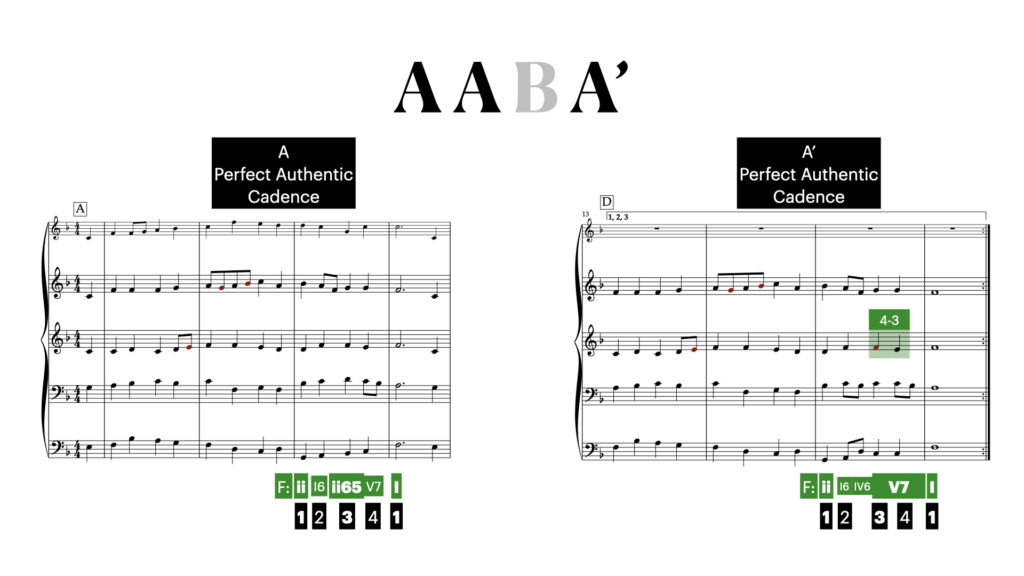
Both the internal cadence (at the end of the first two A phrases) and the final cadence are perfect authentic cadences:
- V(7)–I
- both chords in root position
- tonic in the soprano voice
The difference lies not in what the cadence is, but how it is prepared.
In the final cadence, the dominant arrives a beat earlier, on a stronger part of the bar (beat 3). An additional subdominant harmony appears beforehand, allowing for a 4–3 suspension.
The effect is modest but decisive. The final cadence is simply stronger as a result of the greater and sustained tension and resolution of the suspended, extended dominant leading to the tonic.
It functions like the final sentence of a paragraph: fundamentally similar to what came before, but just conclusive enough to feel final.
Harmonic Language: Economy with Purpose
The harmonic language is deliberately simple.
Excluding the descant, there is no modulation, no borrowed harmony, and no chromatic colouration. That simplicity suits both the function of the music and its subject matter: a carol about humility, about the “little” town of Bethlehem.
Still, Vaughan Williams introduces contrast where it matters.
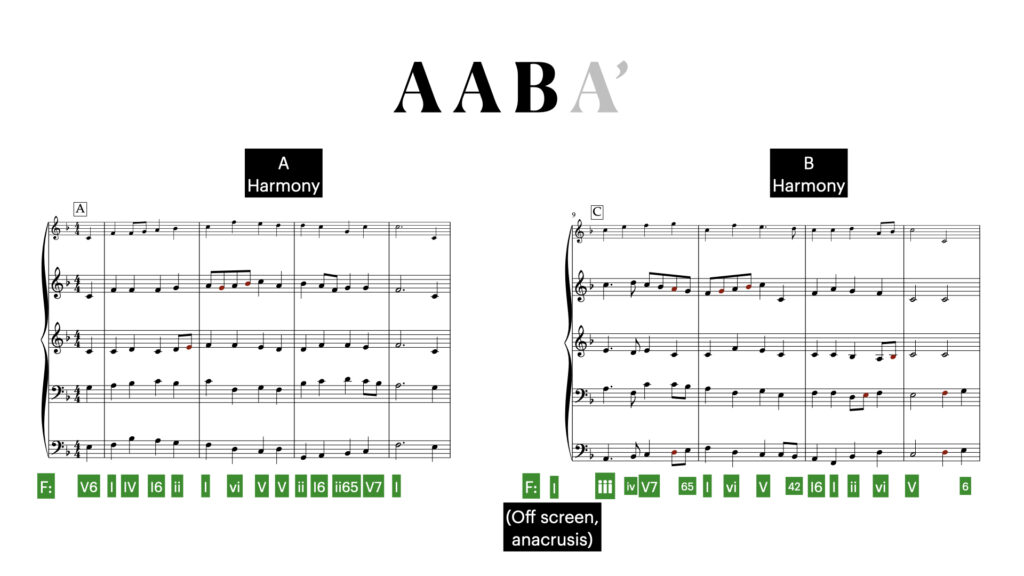
Each A phrase begins with a V⁶–I progression. The B phrase, by contrast, begins with I–iii: the only appearance of the mediant chord in the harmony of the entire piece.
This moment is striking not because it is particularly dramatic, but because it is rare. It is one of the few places where a minor sonority is given prominence at the very start of a phrase, on the downbeat following the anacrusis.
The homophonic texture extends the harmony slightly longer than usual, forcing us to sit in the minor colour.
It’s a small detail, but a telling one. Within such a restricted harmonic palette, this is the furthest we travel from home. Not far, but far enough to provide contrast for this humble carol.
Voice-Leading: Lines That Breathe
Lines matter to Vaughan Williams.
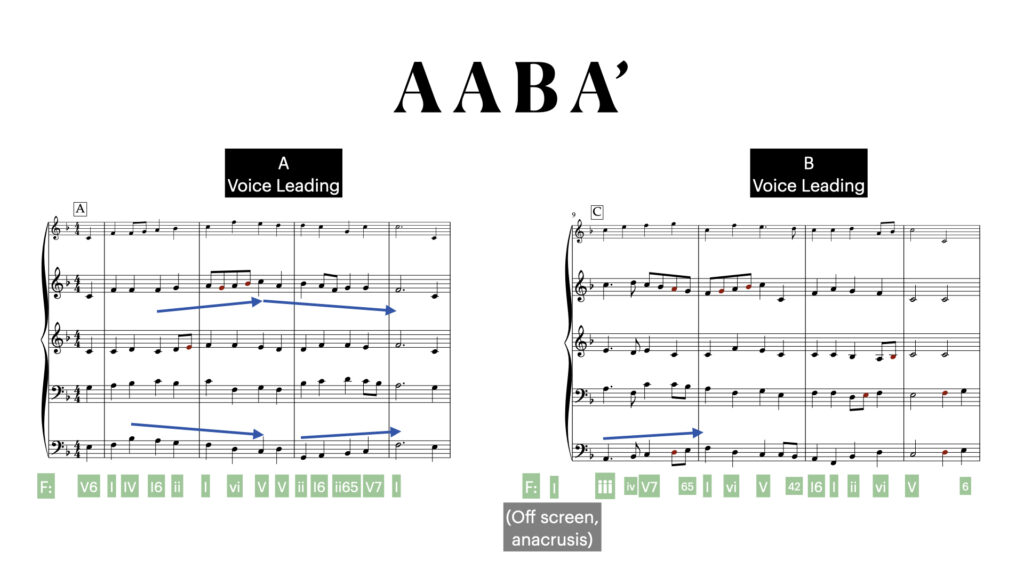
If there is an opportunity to use stepwise motion in the bass, he will almost always take it. Anyone familiar with The Lark Ascending and my analysis will recognise this instinct immediately.
In the opening phrase of O Little Town of Bethlehem, both the melody and bass move largely by step, often in contrary motion. The lines expand away from one another, then contract back toward shared harmonic goals: most notably the dominant and tonic.
A similar process occurs in the contrasting phrase: the melody and bass briefly close in on one another before opening out again.
It’s a simple device that is also common in Bach chorales, but used here with grace. The music breathes because the lines have a sense of purpose and direction. They are not simply meandering.
Melody: From Sentences to Paragraphs
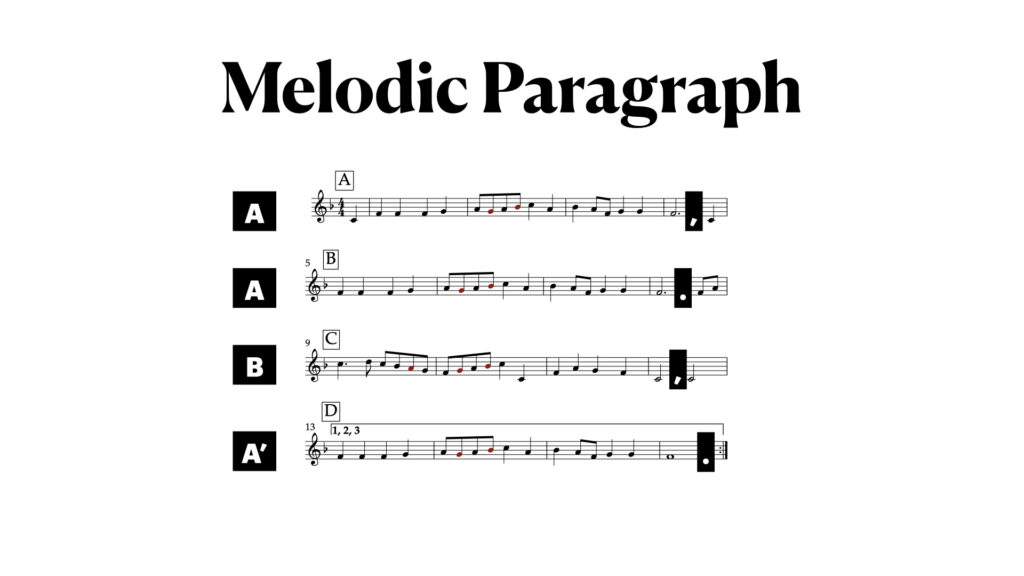
Earlier, it was tempting to describe musical phrases using the analogy of a sentence. In hindsight, it is more helpful to think of the full sixteen bars as a short paragraph made up of two eight-bar sentences.
- Sentence one: A A
- Sentence two: B A′
Thinking about language and the “use of sentences” gives the music an arc that feels complete without feeling heavy-handed. With the contrast of the B phrase, we effectively hear a compact ternary idea: presentation, contrast, and return.
That balance is crucial for a carol with many verses. The structure provides enough variety to avoid monotony, while the simplicity guarantees accessibility.
The melody walks a fine line: engaging without being complicated, familiar without becoming dull. Simple, not simplistic.
The Descant: One Final Harmonic Turn
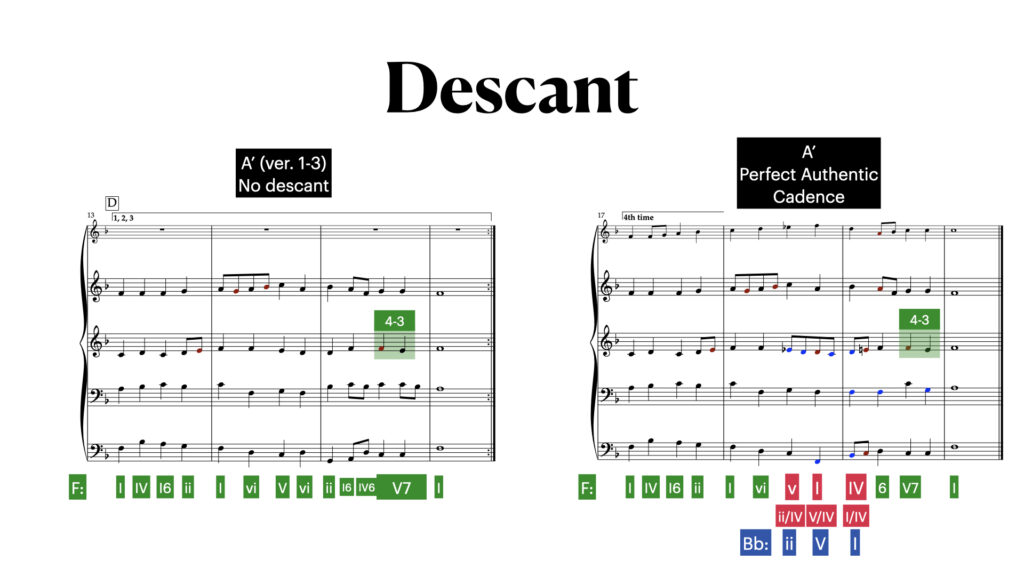
Armstrong’s descant appears only in the final verse, providing contrast through register and counter-melody rather than structural change.
Built largely on the same harmonic framework, it introduces one striking moment near the end: the flattened seventh scale degree, which requires some reharmonisation.
Modally, this creates a Mixolydian flavour, producing a minor dominant effect. Tonally, the progression can be understood as a brief secondary dominant progression in B-flat major, with C minor acting as a supertonic that leads toward a short tonicisation of B-flat.
Within such a restrained harmonic language, this moment feels surprising and dramatic. It draws out the final verse as special, without breaking the character of the piece.
Conclusion: Craft Through Restraint
When a composer or arranger is most restricted, their personality shines strongest. O Little Town of Bethlehem is a reminder that musical craft often reveals itself most clearly through restraint.
Vaughan Williams takes a simple folk tune and, through careful attention to harmony, voice-leading, and form, turns it into something quietly profound. Nothing is wasted. Nothing is overstated.
For composers and arrangers, it offers a useful lesson: clarity and economy are not the enemy of expression. More often than not, they are what make expression possible.
It’s a piece I fully intend to arrange one day.
Probably next year.
Certainly, maybe.
Score Study for Composers
How to turn one idea into a complete piece: melody, harmony, form & orchestration together.
Weekly Insights – Printable guides – Composer-friendly examples
No noise, only signal. Opt out whenever you like.