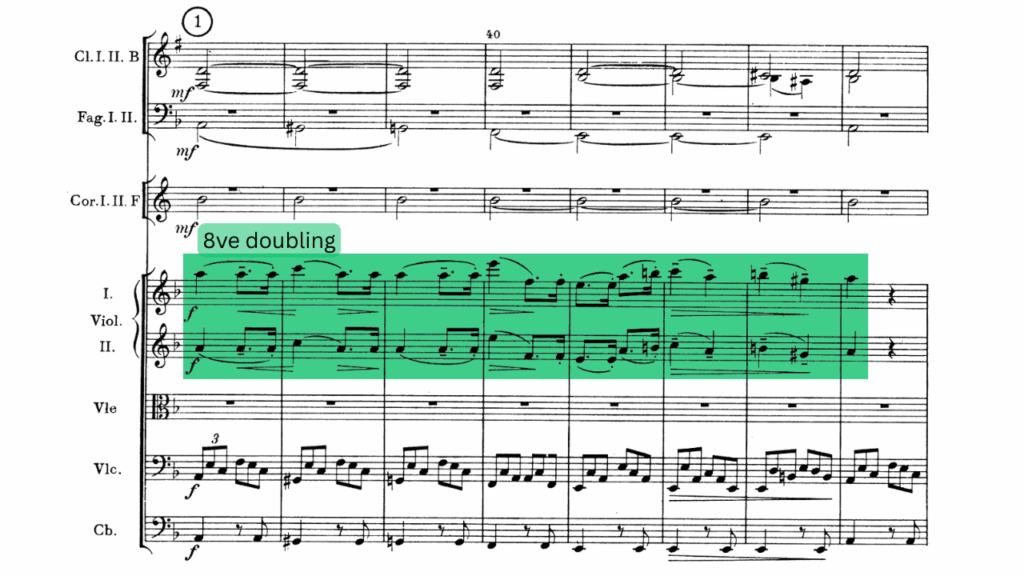
Orchestration

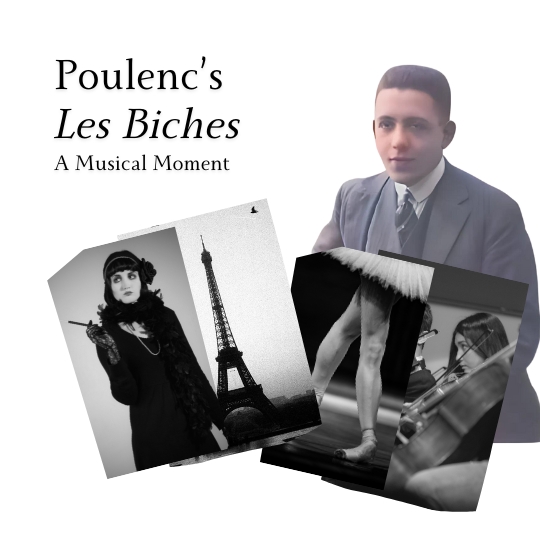
Les Biches (RM25-6) – Francis Poulenc

Musical Moments is a new series where I focus on larger works—whether in orchestration, length, or complexity—and zoom in on small sections for detailed analysis. I will choose these pieces based on what grabs my attention while listening. Once I find an interesting moment, I isolate it and explore why it stands out to me,

Les Biches (RM25-6) – Francis Poulenc Read More »

The Art of Composing for String Quartet: A Guide for Beginners

The Art of Composing for String Quartet: A Guide for Beginners String quartet music has been a favorite of composers and music enthusiasts alike for centuries. The intimate yet complex sound of two violins, a viola, and a cello working in harmony creates a unique musical experience. But what does it take to compose for

The Art of Composing for String Quartet: A Guide for Beginners Read More »

Anatomy of the Orchestra by Norman Del Mar (Book Review)

Norman Del Mar’s engaging and informative writing provides unique insights into instrumentation and the lived experience of a knowledgeable conductor and horn player. Let’s take a look at Anatomy of the Orchestra (1981). The deets I have had this book, Anatomy of the Orchestra, for a while. I cannot remember how I discovered it and

Anatomy of the Orchestra by Norman Del Mar (Book Review) Read More »

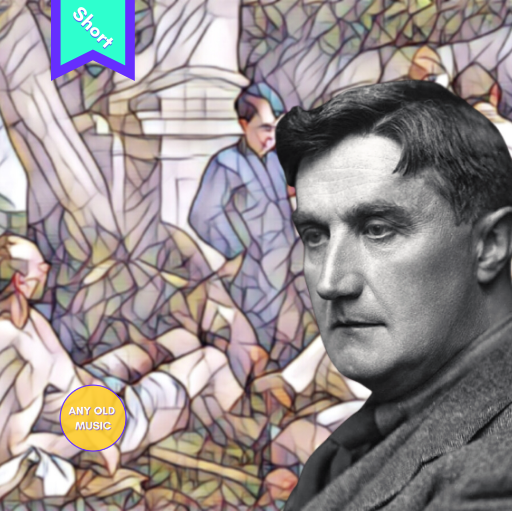
Ralph Vaughan Williams looks towards us, ahead of Lazarus, whose sore legs are being licked by dogs.

Ralph Vaughan Williams – Five Variants of Dives and Lazarus (Bitesize Orchestration Analysis)

It’s easy, when composing for something like a string orchestra to simply think of it as 5-parts: the 1st Violins, 2nd Violins, Violas, Cellos and Double Basses. Yet, these sections of a string orchestra are made up of several players. In his composition Dives and Lazarus, Vaughan Williams experiments with this fact, doubling solo lines,

Ralph Vaughan Williams – Five Variants of Dives and Lazarus (Bitesize Orchestration Analysis) Read More »

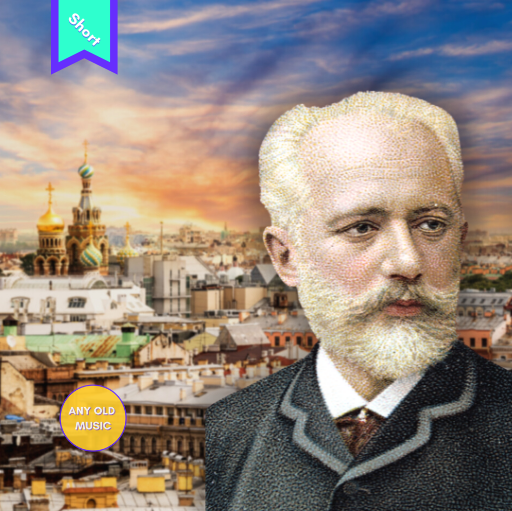
Tchaikovsky enjoying the beauty of Russia

Pyotr Ilyich Tchaikovsky – Symphony No. 2 “Little Russian” – Orchestrating Variety – Bitesize Orchestration Analysis

Tchaikovsky’s Second Symphony, nicknamed “Little Russian”, opens with a melody presented on its own on solo french horn. Tchaikovsky then uses this melody as his only material for the opening three to four minutes, presenting it in three full re orchestrated forms, and then several fragmented forms. The first full version sees bassoons take up

Pyotr Ilyich Tchaikovsky – Symphony No. 2 “Little Russian” – Orchestrating Variety – Bitesize Orchestration Analysis Read More »

Learning from John Williams

Learning from John Williams – Recomposing Flag Parade

A few months ago, I shared an analysis on the Hal Leonard arrangement of John Williams’ Flag Parade cue from the first Star Wars prequel, The Phantom Menace (1999). With these types of articles and videos, the objective is to unearth structure, concepts and techniques of composition via analysis. Occasionally, as I present today, I like to try and

Learning from John Williams – Recomposing Flag Parade Read More »

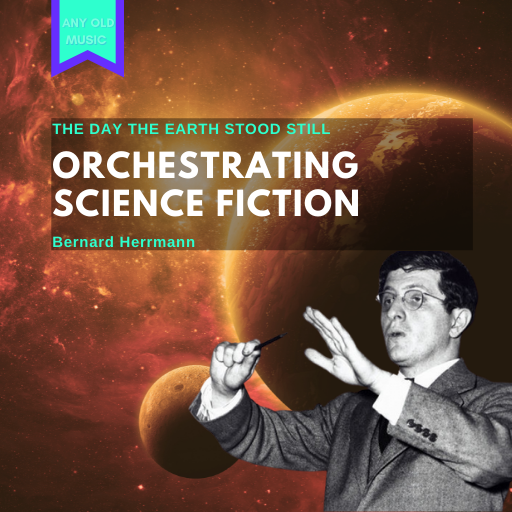
The Day the Earth Stood Still - Herrmann

The Day the Earth Stood Still, Bernard Herrmann – Orchestration Technique

Composed for the film The Day the Earth Stood Still (1951), Bernard Herrmann’s science-fiction score has a lot to teach us about composition and orchestration in the medium of film, media scoring and wider. In this article today, therefore, I want to take a look at Herrmann’s score. I have done my best to be selective,

The Day the Earth Stood Still, Bernard Herrmann – Orchestration Technique Read More »