Analysis

This category contains articles that analyse musical works, discussing what they can teach us as composers, orchestrators and arrangers.

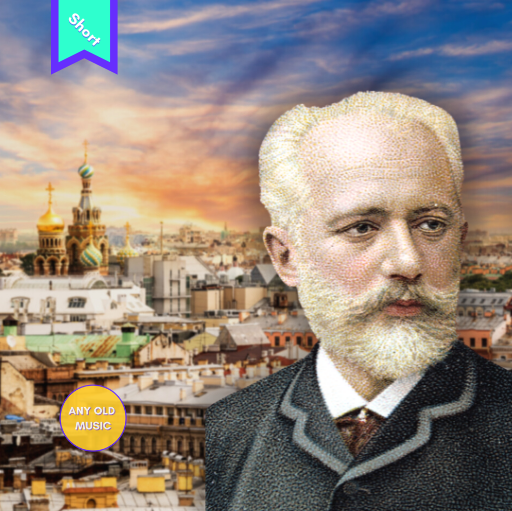
Tchaikovsky enjoying the beauty of Russia

Pyotr Ilyich Tchaikovsky – Symphony No. 2 “Little Russian” – Orchestrating Variety – Bitesize Orchestration Analysis

Tchaikovsky’s Second Symphony, nicknamed “Little Russian”, opens with a melody presented on its own on solo french horn. Tchaikovsky then uses this melody as his only material for the opening three to four minutes, presenting it in three full re orchestrated forms, and then several fragmented forms. The first full version sees bassoons take up […]

Pyotr Ilyich Tchaikovsky – Symphony No. 2 “Little Russian” – Orchestrating Variety – Bitesize Orchestration Analysis Read More »

Chopin enjoying a twilight sky whilerevelling in his craftsmanship.

Frédéric Chopin – Nocturne No. 1 Op. 9 – Developing Melody – Bitesize Composition Analysis

Many of Chopin’s Nocturnes follow a ternary structure, or ABA form, where melodies of the A-section repeat and flank a different middle section. Interestingly, however, Chopin’s Nocturnes often implement subtle embellishments to each repetition of these A-themes. His first Nocturne Opus 9, Number 1 is a good example of these melodic variations. Taking a closer

Frédéric Chopin – Nocturne No. 1 Op. 9 – Developing Melody – Bitesize Composition Analysis Read More »

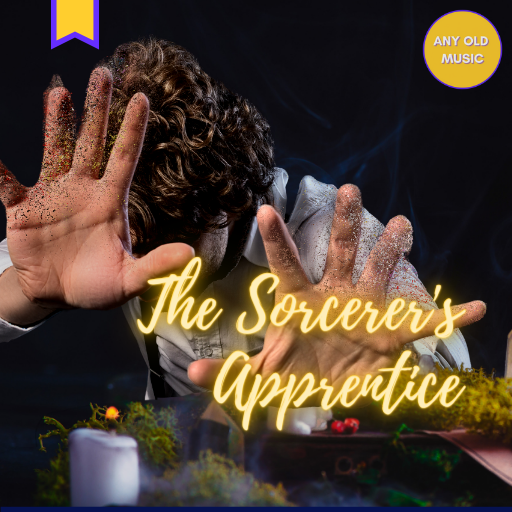
The Sorcerer's Apprentice Header, candles and a young man throwing is hands forwards as if casting a magic spell

The Sorcerer’s Apprentice – Paul Dukas (Music Composition Techniques Analysis)

https://www.youtube.com/watch?v=OYqfTcI3Ztk&t=9s&ab_channel=AnyOldMusic Paul Dukas’s The Sorcerer’s Apprentice (1897) is a musical composition based on a poem, of the same name, by 18th-century German writer Johann Wolfgang von Goethe. Goethe was a product of the later Enlightenment. However, he had a profound impact on the European 19th-century and Romantic culture. For instance, Dukas is only one of many composers

The Sorcerer’s Apprentice – Paul Dukas (Music Composition Techniques Analysis) Read More »

Le Papillon (from Chantefleurs et Chantefables) – Witold Lutosławski – Composition Technique

https://www.youtube.com/watch?v=QYUPk1vKxQk&ab_channel=AnyOldMusic Witold Lutosławski’s Chantefleurs et Chantefables is a song cycle for soprano voice and chamber orchestra, completed in 1991. Textually, the songs use the poetry of twentieth-century French surrealist Robert Desnos (1900 – 1944). A series of children’s poems, compiled and published posthumously in 1955, under the title Chantefables et Chantefleurs (Lutosławski reverses the title

Le Papillon (from Chantefleurs et Chantefables) – Witold Lutosławski – Composition Technique Read More »

Nocturne No. 20 in C-sharp Minor, F. Chopin – Composition Analysis

Chopin’s 20th Nocturne in C#-minor, published posthumously, is a brooding piano solo that boasts, unsurprisingly, facets quintessential to Chopin’s Nocturnes. These qualities, in Chopin’s nocturnes, have long fascinated me as a composer. Simple in design and modest in development, they demonstrate that complexity and quality are not synonymous. Instead, it is about doing enough and

Nocturne No. 20 in C-sharp Minor, F. Chopin – Composition Analysis Read More »

Introduction and Allegro for Strings (Edward Elgar) – String Orchestration

Delineating a string quartet and string orchestra in the instrumentation and engraving of Elgar’s Introduction and Allegro for Strings impacts its composition, orchestration and arrangement. The reason is that it imposes a compelling dichotomy between a string quartet (solo strings) and a string orchestra (sectional strings). Doing this allows and, undoubtedly, encourages Elgar’s exploration of the solo

Introduction and Allegro for Strings (Edward Elgar) – String Orchestration Read More »